Showing posts with label Craft books. Show all posts

Wednesday, February 23, 2022

Learning Craft from Children's Books


I remember years ago someone imparting the advice that if you need to do research on something, start with books written for children. They'll give you the basics which might be as much as you need to know, but if not they will at least make the subject understandable so you can pursue it more easily.

I was reminded of that advice a few weeks ago when I picked up a book I am supposed to use with my Jr. High ELA classes. It's called How to Read Literature Like a Professor: For Kids.
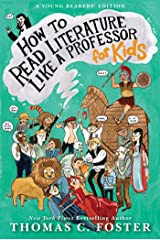


Full confession - my husband bought a copy of the original How to Read Literature Like a Professor years ago. It sat on a shelf that I passed many times a day. I often thought I should read it. I never did. Now I wish I had.


As I was reading the children's version to prepare to teach lessons from it, I realized that many of the points made for children are a good craft reminder for writers.

The Amazon blurb says:

In How to Read Literature Like a Professor: For KidsNew York Times bestselling author and professor Thomas C. Foster gives tweens the tools they need to become thoughtful readers.

With funny insights and a conversational style, he explains the way writers use symbol, metaphor, characterization, setting, plot, and other key techniques to make a story come to life.

 As I read that, I was amused to think that some writers (like this one) may benefit from a reminder of what we are doing. 

I'll digress for a moment to talk education. As a teacher, I usually deplore the kinds of questions on standardized tests that ask about the author's purpose or author's craft. It seems futile to ask a 12 year-old to try to step inside the mind of an author to figure out what they were trying to accomplish. I could go on at length with some ridiculous examples, but that doesn't help us become better writers. The reason I bring it up is that this book, in helping students understand what a writer is attempting, can also help writers better understand what is behind many of the things we do intuitively. 

I really do believe that writers who are avid readers naturally absorb many of the tenets of storytelling.  But I also believe that it's good to sometimes stop and reflect on what we are doing and how we can do it better. This book actually helped me to be more aware of what I'm doing when I write. And if I'm aware, I can be more intentional.

Do you ever turn to children's books for research? 

Do you consciously use literary devices such as allusions, symbolism, metaphors, motifs, imagery, etc. when you write (or does it seep in there unconsciously)?

FYI - If you prefer an adult take on this, Here's a link to 45 Literary Devices and Terms That Everyone Should Know. 

Wednesday, February 24, 2021

Cate's Favorite Writing Books Series - #1

 Hello my Seekerville friends. Cate back again. These months just fly by, and suddenly it's my turn to post again. Honestly, it feels like just yesterday that I was chatting with you all about your feelings about craft books.

There was a wide range of thought on the value of craft books for a writer. No surprise there. Our thoughts are as varied as our personalities and our writing styles. One refrain that was oft repeated though was people, who like me, use craft books as a jumping off point to take a new skill and then practice it with our own writing.

After that discussion, I decided to devote some time to discussing some individual books that I love. I can share them with you, and you can tell me if they're new to you or if you know them and have thoughts of your own to share.


As I mentioned above (and in the previous post), I tend to use writing/craft books more as a jumpstart than as something to read through all at once. There is however, one notable exception to that pattern.

This is the old faithful one I have. 
I've been through multiple copies.


This is the new version.


Bird by Bird was one of the very first books on writing that I ever bought. It is also the only one that I have read and reread completely. It was really life-changing for me because reading Anne LaMott's witty, somewhat irreverent, brutally honest reflections on the writing life allowed me to acknowledge that I could still be a writer even if I was not always in love with the process. 

Writing is hard work, and Anne LaMott doesn't flinch from that. 

But she also gives you ways to help cope when it all seems overwhelming.

One of the best pieces of advice in the book refers to a story from when Anne and her brother were young. He was totally overwhelmed by a school project on birds. She describes how he was sitting at the table, surrounded by piles of books and paper and pencils. Her father came and sat beside him, put his arm around him and said, "Bird by bird, buddy. Just take it bird by bird."

It seems so simple, but for the struggling writer or student, Maybe that struck such a chord because I remembered a similar project when my daughter was in 5th grade. We were up until 5 o'clock in the morning because the project was so massive that it overwhelmed her to the point she had no idea where to even begin.

I have quoted that bird by bird solution to many people over the years. In fact, I just offered it to my daughter the other day when she was again feeling overwhelmed with a big project she has to deal with.


Hand in hand with the 'bird by bird" strategy of writing comes advice to write in "one inch picture frames" - another strategy to help the overwhelmed writer's brain.

Have you ever sat down to write but felt totally overwhelmed by the size of the project? Do you find attempting a full length novel to be daunting? If so, this strategy may help you. To quote Anne Lamott, all you have to do is "write down as much as you can see through a one-inch picture frame."

I remember a tweet from my editor Emily Rodmell that went like this:

"How do you write three books a year?

One book at a time, one chapter at a time, one page at a time, one word at a time."

In the same vein, Anne Lamott quotes E.L. Doctorow. "Writing a novel is like driving a car at night. You can only see as far as your headlights, but you can make the whole trip that way."

This reminds me very much of how writers rave about typing on an AlphaSmart because they could only see a very small rectangle of text. The temptation to fiddle was not as great.


Those two pieces of writing advice are in just one chapter of the book. They're the two that have stuck with me even though it's been decades since I first read the book. There is plenty more to keep you inspired. 

Because I like to share books I love, I'm offering to give away a copy of Bird by Bird to some lucky reader who is interested. Be sure to let me know in the comments if that is you!


So have you read this book (or any of the author's other books)? Share your thoughts on the book, the advice, or anything else you feel like talking about.


Coffee's on. Let's chat!


Free photos thanks to Pixabay


Thursday, February 22, 2018

The Newest in Writing Tools

Welcome all you wonderful writers, 

Cara Grandle here.

If you would like to listen to this post instead of reading it, here is my podcast link with a little more information and some sass. Life Caraphrased.


Today’s Seekerville post will add to your resource pile. I would like to introduce you to several up and coming or newly-released craft tools. Some are books and some are moooooore than books.

If you don't have access to the podcast through iTunes above, here is a link. Life Caraphrased-Seekerville Edition. 

First of all, hats off to Julie Lessman who let me blog in her place. To say thank you, I’d like to give a shout out to her Non-fiction book, Romance-ology 101.


Julie will teach you how to keep the careful balance between the gas pedal and the brakes when writing the passion in your romance.

And now on to our next introduction.

Did you know that Karen Ball and Erin Taylor Young have put their heads and experience together and wrote a new non-fiction series? The first short book in the series, Finding and Working with an Editor will release on March 15, 2018. Available for pre-order now. Here is a blurb:

Finding the right editor can be daunting. And the wrong editor? Devastating! How do you know who (or whom) to trust? Easy. Use the insider information, tested tips, and wealth of worksheets shared by a seasoned editor to guide you.


And for a straight up grammar, punctuation, usage craft book, how about checking our Joyce K Ellis’s Writing with Excellence 201


She adds a clever charm to all the gritty craft layers. Joyce has kindly offered to provide a GIVE AWAY!!!  ANYONE who leaves a comment will be added into the drawing.

And if you soak up all you can from those, then you will love adding Melissa Jagears’s new writers life hack.

Seriously, this non-fiction tool is a must. If you haven’t met Melissa yet, let me tell you she is one sharp cookie. She’s managed to use some of the engineering-math-y type tools that are hidden behind the scenes inside both WORD, OPEN OFFICE and SCRIVENER to make a search-and-destroy-weasel-words cheat that will save you loads of time in your editing process. 


Seekerville people can download the templates or macro code for free using coupon "SEEKERVILLE" until the end of February. Here is a blurb about her craft tool and a link:
Weasel Words
Self-edit better with software you already own!
Whether you’re a writer editing your first novel or a seasoned author wanting to provide your editor with cleaner copy, searching out particular words in your manuscript can help you self-edit with confidence. Weasel words aren’t just words that have weaseled their way into your writing and need to be tossed back out; many can alert you to places where rewriting will help keep readers enthralled.
If you don’t have the luxury of having a writing expert point out your mistakes, Word, Open Office, and Scrivener can be taught to highlight your weasel words with just one click of a button. And with the clear instructions and examples in this book, you’ll know what to do with each and every weasel word you encounter.
Inside this self-editing mini-workshop for novelists, you’ll learn how to set up your writing software to catch everything from grammar flubs to writing craft problems. You’ll be certain you’ve never used a single your or you’re incorrectly, you’ll find places where you’ve told instead of shown, and much more.
Understanding weasel words can help writers at every stage improve their writing without the hefty cost of extra editing.

And after all that goodness I want to make sure you've heard about The Christian Writers Institute.

CWI is an online resource for writers. Think conference caliber teachers and speakers at your fingertips, in your preferred style of learning. Video courses, Audio classes, PDFs, and a place to find all there is on writing craft books. The best-of-the-best teaching you in the comfort of your own home, on your own terms.

If you sign up for the newsletter you can receive a free ebook on how to write a proposal written by Steve Laube of the Steve Laube Agency himself. Talk about learning from the source of proposal wisdom.

And!

Yes. There is more. I hope I don’t sound to used-car sales-ish, but I can’t help it. These new tools are cool.

Did you notice that The Christian Writer’s Market Guide has been revised for 2018.


This is the book for you, if you are looking for where to send short stories and articles for possible publication.

Childrens stories, poems, interviews and soul-enriching real stories are all being requested. If you want to see who-is-who for publishing houses, editors, and agents, the CWMG is a staple.

Annnnnnd, they now have a continuously updated subscription version that you can pay for monthly ($5.99 per month), Semi-annually ($3.00 per month), or Annually ($2.09 per month.) You pay for this and no more dead leads. How cool is that? Thank you Steve Laube! Here is the link.

It’s always easier if you have the write tools for the job. Haha. Yes, a corny joke. I couldn’t help myself.

Craft tools can help stir the pot on the sticky parts of your WIP. You can never have too many.

Thank you for letting me show you what’s new. Never stop learning, my Seekerville friends, never stop learning.

Have you heard of these? Are any of these interesting to you? What is your favorite craft help? Any new craft helps or hacks that you want to let the Seekerville crew know about? Don’t forget all commenters will be added into the giveaway, a copy of Joyce's "Write With Excellence 201".