I'm sure you've heard about the importance of letting a butterfly fight its way out of a cocoon without help - they must struggle or they will die.
The same with chicks breaking out of an egg. Hatching is a process in which the chick fights and struggles...and rests...while it matures enough to live outside the shell.
The point is - struggle is natural. It's healthy. It's how things grow.
Think of a baby learning to walk: There's your little darling, so wobbly on those fat stumpy legs! Do you coddle that sweet thing? Not if you're wise. You let them try to take a step - fall - and try another step. Before you know it, you have a toddler!
Why am I repeating myself here? Because almost every author goes through the same thing - we have trouble bringing enough conflict into our stories. Softheartedness and compassion will cause us to coddle our darlings, but we must not let ourselves do it!
If we don’t let our characters go through tough times we won’t have a story.
Think of some of the great stories you’ve read or seen as a movie – we’ll look at one that most of us know: The Lord of the Rings – the movie version.
When we meet Frodo, he’s a likable sort of lad. He likes to read (a big plus!) and he’s good friends with a wizard. Life is good for Frodo, and before we’re very far into the story, he’s the lord of the manor.
Wouldn’t you love to live in the idyllic Shire? One big advantage is that everyone expects you to be a little chubby!
Except that nothing much happens. If the entire movie – okay, the entire trilogy – stayed in the Shire, following the day-to-day lives of Frodo and his friends… *yawn* … Can you imagine the extended version? Nine hours of watching hobbits eat?
The story doesn’t start until conflict enters in the form of the Black Riders coming to the Shire to find the Ring.
In my February post, (you can read it here) we started outlining a romance story. Our hero and heroine were Benjamin and Heather (no relation to Benjamin and Heather Drexler.)
I started the plotting (using mirrored plot points to create a chiasm) and our own Debby Giusti moved the story along by adding a couple more plot points.
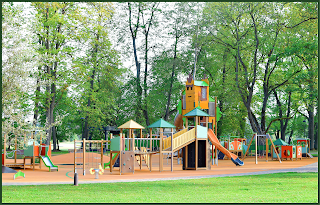
In the beginning of our story, Benjamin works for a company that produces accessible community playgrounds. He has selected the perfect site for the new playground and all he needs is permission from the planning commission.
Heather is a teacher who loves children and wants the best for them. But she has heard about the planned playground and opposes it because of problems with the proposed site.
There’s the beginning of the conflict.
Remember, as much as we like our hero and heroine, we can’t coddle our darlings. We must ramp up the conflict.
Will our characters suffer? Yes.
Will they be better and stronger because of the suffering? Yes.
So, how do we find right conflict for these characters?
This is where character development comes in. We find the right conflict by delving into our characters’ pasts. We need to determine what happened in their past to give them a memory that they stuffed deep into a hole in their minds and won’t bring out again – until they’re faced with a situation that breaks their carefully constructed life into pieces.
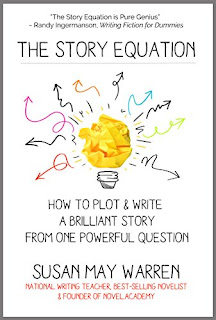
One super-helpful resource for this process is The Story Equation by Susan May Warren.
When we meet Frodo, he’s a likable sort of lad. He likes to read (a big plus!) and he’s good friends with a wizard. Life is good for Frodo, and before we’re very far into the story, he’s the lord of the manor.
Wouldn’t you love to live in the idyllic Shire? One big advantage is that everyone expects you to be a little chubby!
Except that nothing much happens. If the entire movie – okay, the entire trilogy – stayed in the Shire, following the day-to-day lives of Frodo and his friends… *yawn* … Can you imagine the extended version? Nine hours of watching hobbits eat?
The story doesn’t start until conflict enters in the form of the Black Riders coming to the Shire to find the Ring.
In my February post, (you can read it here) we started outlining a romance story. Our hero and heroine were Benjamin and Heather (no relation to Benjamin and Heather Drexler.)

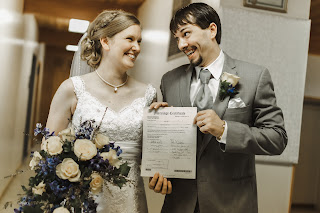
The day Heather Vetsch and Benjamin Drexler were married!
I started the plotting (using mirrored plot points to create a chiasm) and our own Debby Giusti moved the story along by adding a couple more plot points.
In the beginning of our story, Benjamin works for a company that produces accessible community playgrounds. He has selected the perfect site for the new playground and all he needs is permission from the planning commission.

Heather is a teacher who loves children and wants the best for them. But she has heard about the planned playground and opposes it because of problems with the proposed site.
There’s the beginning of the conflict.
Remember, as much as we like our hero and heroine, we can’t coddle our darlings. We must ramp up the conflict.
Will our characters suffer? Yes.
Will they be better and stronger because of the suffering? Yes.

So, how do we find right conflict for these characters?
This is where character development comes in. We find the right conflict by delving into our characters’ pasts. We need to determine what happened in their past to give them a memory that they stuffed deep into a hole in their minds and won’t bring out again – until they’re faced with a situation that breaks their carefully constructed life into pieces.
One super-helpful resource for this process is The Story Equation by Susan May Warren.
For Heather, it’s her dad’s death. He worked at the battery plant that was once on the piece of land earmarked for the playground. She is convinced that the cancer that killed him came from years of working in the toxic environment of the plant, but can’t prove it. Her goal is to prevent the city from using that piece of ground for anything until she can convince the EPA to test the area for lingering toxins.
For Benjamin, it’s his little brother who was born with spina bifida. His passion is to build playgrounds that are accessible for all kids. He has watched his brother shoved to the sidelines because there was no way for him to play safely while confined to a wheelchair. His goal is to provide a place for kids like his brother to have fun.
Do you see how their goals are heading in different directions? When they collide, that’s conflict!
And as the story goes along, there will be one conflict after another – just when we think we’ve reached a resolution, another twist comes along and ramps the conflict up again.
Meanwhile, as our characters face these conflicts they are growing and changing. Making decisions and living with the consequences. And by the end of the story, coming to a satisfying resolution.
Next month we’ll talk about resolving conflicts, and how some of the consequences of those resolutions can lead to more conflict.
Creating conflict for our characters is one of the hardest things for an author to do, especially when we're just starting out. But can never let ourselves be tempted to coddle our darlings!
Have you faced this problem in your writing? How did you solve it?