Showing posts with label Split Time Stories. Show all posts

Tuesday, January 25, 2022

Welcome Guest Blogger, Olivia Newport!

Erica Here: I am pleased to host author Olivia Newport here at Seekerville today. Olivia is a multi-published author whose latest venture is a series of time-slip novels featuring family genealogy! So here's your chance to ask all those time-slip story and genealogy questions! Take it away, Olivia!


A Satisfying Time-slip Method


Perhaps I’ve never been very good at decisions. All the way back in college, I completed two majors that were not particularly related to each other (English and religious studies) because when the time came to declare a major, I just couldn’t choose.

As a novelist, my first books were historical, and I sometimes wonder why I didn’t major in history in college (triple major?). But I also love digging into a good contemporary story with a good mystery or social twist (why didn’t I major in sociology?), so I’ve written some present-day stories also.

I’ve had a lot of fun the last several years bringing historical and contemporary together in time-slip novels around unfolding genealogies. Curious readers ask me how I go about writing these books. I’m sure every time-slip author finds a method that works individually. For me, I research, write, revise, edit, and edit again the historical story line before I ever touch the contemporary. I want the historical part of the time-slip not only to serve the contemporary conflict but also to be a story of completeness and satisfaction in itself, especially since often it involves putting fictional characters in true historical events. Will the reader sigh with the last pages of the historical story interspersed among contemporary pages? I hope so.

Nailing down the details of the historical line also lets me plan how to slowly reveal its details in ways that lead the reader through the mystery and tension of the contemporary line. I even make a “What We Know So Far” chart for the contemporary chapters to guide me in making sure I don’t get ahead of myself in how past details is unfold and influence the present. I may know the whole story, but my characters don’t! They don’t know anything more than the reader, so as I tuck the historical chapters among the contemporary chapters, catching any errors in this pacing is crucial to a successful story.


The Tree of Life
series began releasing in 2019 with The Inn at Hidden Run. Now book 5 is out, Now That I Know You. Each book’s plot is freestanding from the others with repeating main characters, so they make sense even if you haven’t read them in order. This book offers a little extra fun for readers of books 3 and 4 by picking up favorite spots and seeing what more smiles they bring us. Here’s the summary:

Cate Butler is the distant cousin genealogist Jillian was so certain she wanted to find—and the only connection she has to her deceased mother’s Parisi family tree. So why does she wish Cate would stop pestering her? And why can’t Jillian find a paper trail proving Cate is who she says she is?

Cate wants something for her own career that Jillian can’t give, but she also holds the key to family history Jillian can’t bring herself to walk away from. Nolan, Jillian’s father, steps in when Cate’s chronic career chaos requires legal rescue. Drew, the man who holds Jillian’s heart, has a surprising past with Cate. The truths Jillian, Cate, and Drew find while untangling these knotted threads tie them back together in remarkable ways none of them ever would have imagined.


A question for you: Since I’m writing about genealogy in the Tree of Life books, in the comments tell me an interesting story from your family’s history. Have you seen an influence of the past on the present in your family?


Bio


Olivia Newport’s novels blend the truth of how our pasts carry us into where we find ourselves now. Curiosity about history seems to creep into everything she does. Her books include Amish, historical, and contemporary stories that span the centuries from before the Revolutionary War right up to the present moment. She chases joy in stunning Colorado at the foot of Pikes Peak. Her new book, Now That I Know You, is available on Amazon, Barnes and Noble, or Booksamillion. Visit www.olivianewport.com for more information.

Tuesday, February 9, 2021

Welcome Guest Heidi Chiavaroli


I have loved split-time stories since before they were known by that name. The first I recall reading were written by Barbara Michaels (Patriot's Dream) and Barbara Erskine (Lady of Hay) and both had a hint of the supernatural. So naturally I'm thrilled to welcome Heidi here today to discuss writing in that genre.

Heidi's publisher is generously giving away one print copy (U.S.residents only) of The Orchard House, so please let us know in the comments if you are interested.

Welcome, Heidi.


                            My Journey to the Split-Time Genre

Heidi Chiavaroli

When I began writing, I had only one kind of story in my heart: historical. Quite simply, I loved history. Couldn’t get enough of it. I loved the research. I loved visiting historical places, imagining the real people who lived hundreds of years earlier.

So, despite the rejections that flowed in, I wrote in this genre for eight years. But even after I improved my craft and started winning contests, I couldn’t clinch that elusive contract. One agent told me that while my writing was “quite good,” historicals were tanking.

About that time, Susan Meissner’s The Shape of Mercy fell into my hands. I gobbled it up, quickly followed by A Sound Among the Trees, Lady in Waiting, and A Fall of Marigolds. It was like a whole new world had opened up to me. Not only was Susan’s writing pure gorgeousness, but she did something incredibly unique to me: she created two story worlds—two timelines—in one story, bringing them together in perfect harmony by the end.

I couldn’t get enough and searched out more authors and more books as well as dipping my toe into the world of time-slip fiction. I also shifted from writing third-person to first-person POV.

As soon as I completed my first dual timeline novel, The Edge of Mercy, I started getting interest from agents and editors. I seemed to have found my niche, along with my voice. My second split-time novel, Freedom’s Ring, earned me my first publishing contract. And now, four books later, I still can’t get enough of this type of story.


A split-time book shows how characters and their legacies outlast them. And while we may have come much farther in technological advancements in the last couple hundred years, we share the same heart struggles as those who’ve come before us. Pain, fear, love, grief, joy—these are all as timeless as humanity. And we can learn from the journey of those who’ve come before us.

Another fun aspect is exploring real historical people. In my latest novel, The Orchard House, I dug up all I could on Louisa May Alcott. Not only was it super fun to visit Concord, Massachusetts, for research, but creating characters in the present day who would be directly impacted by Louisa and her books gave fresh meaning to this beloved woman’s legacy.


Sage advice dictates writers who have already established themselves not stray too far from their genre, but time-slip encapsulates both the contemporary and the historical, making it a sometimes-easier go-to transition than other genres.

If you’re trying to break into the industry and having little success, consider trying something new. Change what point of view you’re writing in. Try to write in the shoes of a character you wouldn’t normally gravitate to. Maybe change genres.

You never know what might be around the next corner (or time frame!).

Have you ever tried to write something completely different? How did this work out for you? Did you find it freeing or frightening?


About the Author

Heidi Chiavaroli writes women’s fiction, combining her love of history and literature to write split-time stories. Her latest book, The Orchard House (February 2021), follows the lives of two estranged sisters who find forgiveness and reconciliation through the little-known story of author Louisa May Alcott’s time as a Civil War nurse. Visit Heidi online at heidichiavaroli.com.

Monday, January 25, 2021

Learning Your Family's Stories with Guest Blogger Amanda Wen

Erica here: I am delighted to welcome today's guest-blogger, Amanda Wen. Amanda is a debut author, and her new book is called Roots of Wood and Stone, a split time set in Sedgwick County, Kansas. As a native Kansan, I was so excited when I read the synopsis for this book. Amanda is published by Kregel, my publisher, so we're not only Kansans at heart, we're pub-mates! If you get a chance, I recommend following/friending Amanda on social media. Her posts about her kids, affectionately dubbed "The Wenlets" are hysterical!

Amanda Wen

If you’ve been a writer for any length of time, you’ve probably been asked—or perhaps wondered yourself—where to get story ideas. For my debut, Roots of Wood and Stone, the answer centers around a century-old farmhouse, an ancestor’s memoir, and my mom’s hobby of genealogy.

Mom’s been tracing our ancestry longer than I’ve been alive, so my childhood is peppered with vacations to places like Bean Blossom, Indiana (really!). While my mother combed through census records and property deeds, my brother and I would spend hours in small town libraries and courthouses devouring Dave Barry and Calvin and Hobbes, watching the clock, and trying to ignore our snack-deprived stomachs. As a kid, this resulted in decidedly lukewarm enthusiasm for my mom’s hobby, but now as an adult and a writer, I’m immensely grateful for all the stories she learned over the years, some of which have found their way into fiction.

But if you didn’t spend your formative years vacationing to Middle-Of-Nowhere, West Virginia, all is not lost. I’m here with a few easy pointers to help you start learning your family’s stories, and possibly even sowing seeds for your own.

If you’re fortunate enough to still have your parents or grandparents around, take time to listen to—and maybe even record!—their stories. You might be surprised what they already know about who you are and where you came from. In addition—and historical writers can attest to this—such conversations are invaluable when it comes to details like food, slang terms, and trends of bygone eras. But even if you’re a contemporary writer, story ideas can still surface. Maybe your grandparents’ meet-cute can find its way into your next contemporary romance!


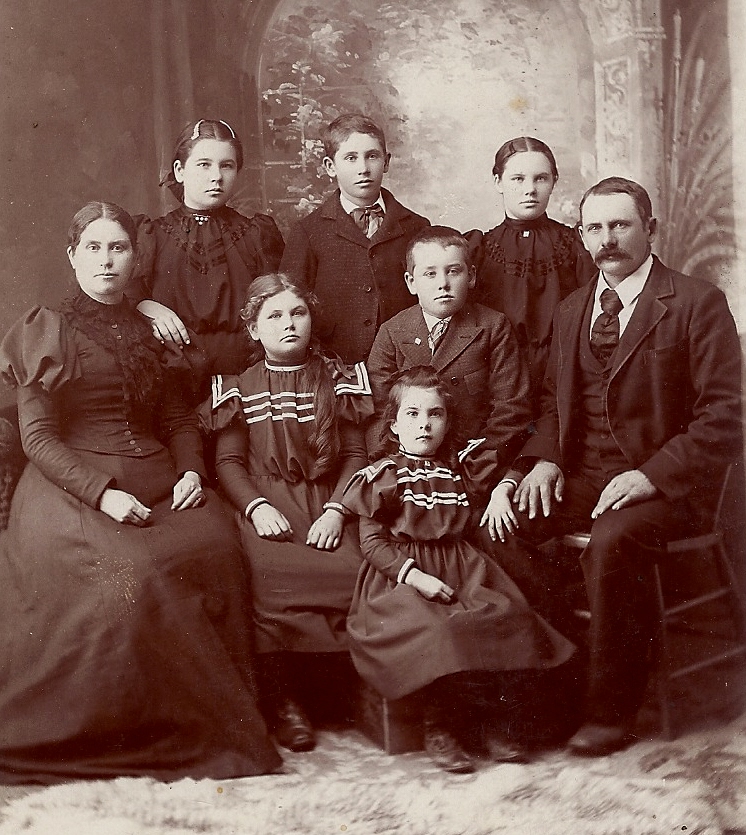
From Amanda's Family Archives

The Internet is also chock-full of resources for genealogists. Ancestry.com, a site my mom has used for years, contains a wealth of birth, marriage, and death certificates, passenger registries, military records, census indices, and more. If someone else has already looked into your family, that information will be there, so you might find a photo of an ancestor you never even knew existed! You may learn that one of your forbears was killed by a falling icicle (as one of mine was) or that your great-great-grandmother was carried across the Isthmus of Panama on the back of a native guide (also a true family story). Ancestry has a monthly subscription fee for those who really get into it, but if all you’re needing is ideas, their free 14-day trial should suffice. 


Another amazing—and free!—online resource is
Find A Grave. Tombstone inscriptions frequently include valuable genealogical information like birth and death dates as well as names of parents, children, or spouses. Before the Interwebz, the only way to find this information was to physically visit the cemetery. This meant that, yes, our family vacations also involved trudging through cemeteries in indescribably remote places, scraping away lichen to reveal worn inscriptions, and very often picking thorns out of our socks for hours afterward (“What’d you do on your vacation?” “I went to Disney World! What about you?” “You wouldn’t believe me if I told you…”). But now with Find A Grave, you can pay a virtual visit to any cemetery with just a few clicks of your fingers.

As with Ancestry, Find A Grave often contains a wealth of information submitted by other users. This information can and often does include obituaries, photos, and links to other family members, all of which can easily spark story ideas. Through Find A Grave, I learned the story of my great-great-great grandmother, Sarah Stevens, who, along with her infant son, George, died shortly after she and her husband, William, arrived as early settlers of Sedgwick County, Kansas. Included in her online memorial is a quote from a biography of her husband: “[William] was visited with a sore affliction in the death of his wife, which occurred the following year, 13 May 1871, while she was still a young woman, being but thirty-eight years of age.”

This quote really sparked my imagination. What would a recently-arrived pioneer do when gutted by such a “sore affliction?” How would he cope with the tasks of running a farm and raising his other children and emerge with his faith intact (as was the case with William Stevens)? These questions, and the resulting rumination, eventually found their way into the pages of Roots of Wood and Stone in the character arc of my historical-timeline hero, Jack Brennan.

I won’t spoil Jack’s story for you, but I will give you a post-script to the story of William and Sarah Stevens. One of their older children, Mattie, was my great-great-grandmother. She went on to marry another pioneer, an Irish immigrant named Francis Little. That memoir I mentioned at the beginning of this post was Francis’s memoir, and that farmhouse? That was Francis and Mattie’s house. While researching the book, I learned that a distant cousin still has access to the (now-abandoned) home and offered to give me a personal tour.

Of course I invited my mom.

I hope I’ve helped spark a new way to get inspiration for all you Seekers, and I can’t wait to see what stories emerge as you all mine your heritage for ideas. Have you ever put any of your family history in a story? Any memorable ancestor stories you’d like to share? I’d love to know! Leave me a comment below, and one lucky commenter will win a signed paperback copy of Roots of Wood and Stone!


Releasing TOMORROW!
Get your copy today!

Amanda Wen is an award-winning writer of inspirational romance and split-time women’s fiction. She has placed first in multiple contests, including the 2017 Indiana Golden Opportunity Contest, the 2017 Phoenix Rattler Contest, and the 2016 ACFW First Impressions Contest, among others. She was also a 2018 ACFW Genesis Contest finalist.

In addition to her writing, Amanda is an accomplished professional cellist and pianist who frequently performs with orchestras, chamber groups, and worship teams, as well as serving as a choral accompanist. A lifelong denizen of the flatlands, Amanda currently lives in Kansas with her husband, their three adorable and hilarious Wenlets, and a snuggly Siamese cat. Roots of Wood and Stone is her debut novel.

Social Links:

               Website: www.amandawen.com

               Newsletter (with free short story): http://eepurl.com/c_xqXr

Facebook: www.facebook.com/AuthorAmandaWen

               Insta: www.instagram.com/authoramandawen