Showing posts with label research. Show all posts

Friday, March 11, 2022

My Obsession with Research

By Michelle Shocklee


I often wonder what my high school history teacher would think if he knew I grew up to become an author of historical fiction. He would no doubt be quite surprised considering my utter lack of interest in bygone eras while spending time in his classroom. Dates, facts, ancient events. Blah. Who cares? I often wondered as he droned on and on about wars and people whose names were faintly recognizable . . . although I couldn’t tell you why.


Fast-forward to my late twenties, when I discovered that I not only enjoyed reading historical fiction but found deep satisfaction in writing it as well. And, as every historical author knows, it’s the research into those once-dreaded dates, facts, and ancient events that breathes life into the story. I can’t get enough of them now.


You might even say I’m obsessed with research.


My latest novel, Count the Nights by Stars, is a split-time story. With each of the settings being historical, I had the wonderful task of researching two vastly different time periods. When I’m in the throes of writing a new novel, research books litter my desk and the floor surrounding my chair. Websites on historical happenings are constantly open, articles are printed, and I find there simply isn’t enough time in each day to read and research all the fascinating facts about my chosen topic.


After my husband and I moved to the Nashville area in 2017, I was like a sponge soaking up Tennessee’s captivating history. I grew up in Santa Fe, New Mexico (which has a captivating history of its own I plan to write about someday), and lived in Texas for thirty years after marrying a Texan, so I’d never given much thought to Tennessee. Sure, I knew Nashville was famous for country music and the Grand Ole Opry, but after moving here I discovered a rich history that had nothing to do with music. Those discoveries would eventually inspire me to write my Christy Award‒nominated novel Under the Tulip Tree. But because I’d learned so many interesting things about Nashville’s history through my research that weren’t included in that book, I knew I had to write another one. This time the two historical stars would be the Tennessee Centennial Exposition of 1897 and the famed Maxwell House Hotel.


To help readers envision the exposition, I needed to go beyond mere description. I had to make the expo grounds come alive with sights, smells, and sounds. This is true in any novel, but it is especially true in historical fiction because modern-day readers can’t place themselves in the setting the way they can with a contemporary story. Historical authors must, must, must bring history to life, and to do that we need to know the facts. Yes, those dry, boring facts we despised in history class now become lifeblood to our books. Without them, readers can’t experience the setting with the characters, which becomes a real problem for both the author and the reader.


One of the methods I used to help bring history alive in Count the Nights by Stars was to study photographs of the exposition grounds. Every black-and-white photograph—and there are hundreds of them—reveals large and minute details I incorporated into the story. For instance, while describing Vanity Fair, the amusement area of the fairgrounds, I let my heroine, Priscilla, and her group enjoy spicy pork sandwiches from the Cuban Village while sitting on the banks of Lake Watauga in the warm June sunshine. They discuss what they see—the Parthenon, the Egyptian pyramid-shaped Memphis building, and the giant seesaw—while feeding crusty ends of their sandwiches to the ducks. In those few paragraphs, the reader not only visualizes the setting but imagines the flavors and sounds as well.


Historical photographs also allowed me to place Priscilla and Luca under the newly invented electric lights of the fairgrounds at night, which was especially vital for a pivotal scene. Had I not known electric lights had been employed throughout the fairgrounds, my characters would have been wandering around in the dark. My research also provided schedules and routes for electric streetcars running to and from the exposition, which was essential information at different points in the story. I hope readers of Count the Nights by Stars will truly experience the exposition in their imaginations.


The Maxwell House Hotel is the other main location that appears in both time periods. Priscilla and her family stay at the hotel during their visit to the exposition in 1897, while Audrey and her family live in the hotel manager’s apartment in 1961. Even though it was the same hotel, I might as well have been writing about two separate places. Time had not been the old hotel’s friend, and by 1961 it was a run-down residential hotel rather than the grand dame of Nashville as it had once been. The detailed language I used to describe the magnificent hotel in 1897 was not applicable in the 1961 story. That’s where extensive research came in. Using old newspaper articles, firsthand accounts, and archived pictures, I was able to accurately describe the once-gleaming hotel as it was in 1961.


Writers often ask this question: When do you have enough research?

My answer: Never . . . but you eventually must stop researching and start writing!


Have you read a book where the setting positively came alive in your imagination because of the author’s description? Tell me about it!


(Comment below for a chance to win a copy of Count the Night by Stars).**


ABOUT THE AUTHOR 
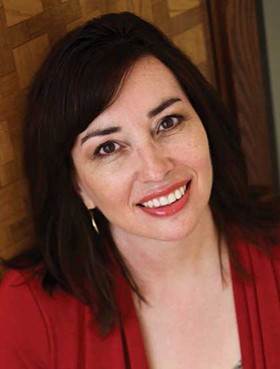
Michelle Shocklee is the author of several historical novels, including Under the Tulip Tree, a Christy Award finalist. Her work has been included in numerous Chicken Soup for the Soul books, magazines, and blogs. Married to her college sweetheart and the mother of two grown sons, she makes her home in Tennessee, not far from the historical sites she writes about. Visit her online at michelleshocklee.com.


 ABOUT COUNT THE NIGHT BY THE STARS

Count your nights by stars, not shadows. Count your life with smiles, not tears.

1961. After a longtime resident at Nashville’s historic Maxwell House Hotel suffers a debilitating stroke, Audrey Whitfield is tasked with cleaning out the reclusive woman’s room. There, she discovers an elaborate scrapbook filled with memorabilia from the Tennessee Centennial Exposition. Love notes on the backs of unmailed postcards inside capture Audrey’s imagination with hints of a forbidden romance . . . and troubling revelations about the disappearance of young women at the exposition. Audrey enlists the help of a handsome hotel guest as she tracks down clues and information about the mysterious “Peaches” and her regrets over one fateful day, nearly sixty-five years earlier.

1897. Outspoken and forward-thinking Priscilla Nichols isn’t willing to settle for just any man. She’s still holding out hope for love when she meets Luca Moretti on the eve of the Tennessee Centennial Exposition. Charmed by the Italian immigrant’s boldness, Priscilla spends time exploring the wonderous sights of the expo with Luca—until a darkness overshadows the monthslong event. Haunted by a terrible truth, Priscilla and Luca are sent down separate paths as the night’s stars fade into dawn.

Count the Night by Stars releases on March 22, 2022. 


**Giveaway prize courtesy of Tyndale House Publishers. Subject to Seekerville and Tyndale House Publishers' Giveaway terms. US mailing address only. Thank you.

Monday, November 15, 2021

Giving Life to Your Setting (Settings, part 2)


Settings is the theme of this post, part two to my post from last month. You can read that post HERE if you missed it or need a reminder.

This month we're going to talk about giving our settings life - providing the details and accuracy that makes our settings real.

How can we give our settings life?

Think of all the details that go into bringing your reader into the setting of your story. The five senses – taste, touch, smell, sound, sight – are your tools, but how can you use those tools to make your setting unique? And not only unique, but accurate?

Research.

The best kind of research is what I call “feet on the ground.” This is where you visit the location of your story.

Let’s use my story, “A Home for His Family,” as an example. The setting is 1876 Deadwood, Dakota Territory. The crest of the gold rush.

For my feet on the ground research, I traveled to Deadwood (not a long trip for me – the town is about an hour away from where we live) and took advantage of the historical walking tour. Definitely worth my time! I also spent an hour (or two, or three) in a museum dedicated to the town’s early history – the same years of my story setting. Seeing some of the clothing, furniture, pens, and other things used at that time (including the hypodermic needles the prostitutes used for their drugs) from that era helped me add authentic details to my story.


 I also spent time walking through the cemetery and reading inscriptions on the grave markers. So many of the early graves were for Civil War veterans who came to Deadwood ten years after the war ended to find their fortunes – a detail that became part of my hero’s backstory.

Many of the old stones have been restored by the Deadwood Historical Society

I also read books. I read an autobiography of a woman who had been a young girl in Deadwood at the time of my story (her father had been the territorial judge.) I met people like Calamity Jane and Seth Bullock through her eyes. I also read first-hand accounts of figures who were part of the gold rush history of Deadwood. Source materials like these are invaluable when you’re trying to cement the setting (time and space) in your imagination.

I also found photographs of the town from those early years, crude maps of mining claims (including a few in the middle of Main Street,) and descriptions of life in a mining camp.

All of this research was to give my readers an authentic representation of the setting.


What if I'm writing a contemporary novel?

Many of the same research techniques apply, except that the source materials will be current rather than historical! Again, feet on the ground research is the best.

But if you can’t travel to your location, the internet is your friend. Most towns have a website or Facebook page. For information about the inner workings and issues facing small towns in the Black Hills (for my WIP, a cozy mystery in a contemporary setting,) I subscribed to a local small town paper.

How do I start?

 - When I’m exploring a new-to-me setting, I go to Google Maps first. That helps me set the location in its geography and proximity to other towns. This helps for imaginary towns, too. If my setting is in rural northern Indiana, I focus on the area (terrain, roads, highways, etc.) and start building my imaginary location from that.

 - If I’m writing an historical, my next step is to look for the location in a map from the same time period as my story (or as close as I can get.) My favorite source for this is Historic Mapworks.

 - Then I start delving deep into the plethora of research materials available through the library or online. Our own Erica Vetsch finds some of the greatest books and sources for researching the Regency Era and the Napoleonic Wars. I love perusing local used bookstores and tourist areas for Black Hills history (the tourist mecca, Wall Drug, has a fabulous bookstore!)

 - I never discount using fiction for my research – if the other author has done his or her research well, I can glean a lot from their knowledge as I read their book.

 - I talk to people. When I go to a museum, I try to strike up a conversation with a docent. They are usually volunteering their time as docents because they LOVE their subject and are very knowledgeable. A word of warning, though – although most docents are this way, I have run into a few who know nothing about their subject. Some people volunteer for other reasons. So I try to have a working knowledge of my subject before I have that conversation.

Some friendly (and knowledgeable) docents at the Somerset Historical Center in Somerset County, PA
 

Are you ready to talk about the setting of your novel? How did you choose it? How did you do your research?

Let’s talk!

And just for fun, the Deadwood story I mentioned in this post is being re-released in a two-for-one from Love Inspired in January! One commenter will win a copy - sent after its publication, of course. Meanwhile, you can preorder HERE.

About the stories:

A ready-made family

The Texan's Inherited Family by Noelle Marchand

Busy Texas farmer Quinn Tucker is used to raising crops, not children. So when four nieces and nephews are left in his care, it's not long before he realizes they need a mother. But his search for a wife leads to the least likely woman for illiterate Quinn—schoolmarm Helen McKenna. Could a marriage in name only blossom into something more?

A Home for His Family by Jan Drexler

Nate Colby came to the Dakota Territory to start over, not to look for a wife. He'll raise his orphaned nieces and nephew without schoolteacher Sarah MacFarland's help. Sarah deserves better than a man who only brings trouble to those around him. Yet helping this ready-made family set up their ranch only makes Sarah long to be a part of it—whatever the risk.

Tuesday, May 25, 2021

From Ordinary to Extraordinary: How Asking Questions Can Make Your Story Shine with Guest Blogger Laurel Blount


by Laurel Blount

As a writer, two of my favorite things are telling stories—and asking questions that help me tell better stories.

I’ll start off with a story. I was sorting through a box of photos, and I came across this one from about twenty years ago. That slightly blurry girl is me, sitting in the Atlanta airport getting ready to fly off to Paris with three teacher friends.

That trip-of-a-lifetime was every bit as awesome as it sounds. I lit a candle and prayed at Notre Dame, explored Versailles, went to the top of the Eiffel Tower, and ate some truly scrumptious food. But you know why I smiled when I saw this photo?

It’s my haircut.

I’d never had short hair. Like…never. My whole life I’d had long hair, with swoopy bits that fell over my forehead.

I was tired of that look, and I wanted to spruce up for my special Paris trip. I just wasn’t sure what to do.

One day, I was sitting in the stylist’s chair—the same sweet lady I had been going to for years—peeking out from under my bangs at my frumpy self in her mirror. I mustered up my courage and asked her a question:

“If you could do anything with my hair, what would you do?”

And oh, my word, ya’ll. It was as if I’d flipped some kind of switch. That woman’s eyes lit up, she grabbed a book, and she started thumbing through pages. “This!” She pointed to a super short haircut. “This right here! This is the perfect cut for you. You need to get your hair off your face and shorten it up. And then for pity’s sake, girl, go get your ears pierced!”

The poor lady was bouncing with excitement. She’d been cutting my hair for years, and apparently had secretly been dying to tell me what to do.

But, see? I’d never asked.

I was taken aback, and I definitely wasn’t sure about going that short. She seemed really confident, though, and she knew a lot more about hairstyles than I did.

So after one long minute, I said, “Do it.”

And you know what? I loved that haircut! It was fun-looking and simple to take care of, and I bopped all over Paris with easy-care, cute hair. (And earrings. Because she was right about that, too.)

That experience taught me a lesson that I’ve applied to my life—and my writing process—over and over again. People are often eager to share their expertise—but you’ve gotta ask.

For example, I have a wonderful vet who reads my animal scenes. (This is especially important since I’ve ventured into Amish fiction. That’s a lot of horses, ya’ll.) I knew she was a very busy professional, and I hated to bother her. But finally, when I had a really tricky horse section, I just…asked. Turned out, she was delighted to help me, and she’s been such a blessing!

I also have a dear author friend who was an ob/gyn nurse, and I asked if she’d check a maternity scene in my Love Inspired in progress. She did, and she told me what I’d gotten wrong—which was plenty. (In return, I gave her tips when she was writing about milking a cow. Hey, I’ve got some skills, too!)

I’ve talked to doctors, journalists, social workers, farriers, adoption coordinators, former law enforcement officers, sales executives, ministers—you name the profession, I’ve probably cornered one of them and said, “Could I ask you a question?” Most of the time, they’ve been very gracious and generous with their knowledge.


When I considered delving into Amish romance, I hesitated. I’d read lots of books about the Plain lifestyle, sure, but those only take you so far. I wanted to hear a more personal perspective. So, I approached an acquaintance, Anna, who’d grown up Amish and left her community as an adult. I respectfully asked if she’d mind answering a few questions for me, and she agreed.

That led to some fascinating talks. She enjoyed some of my questions more than others—like the time I asked her if Amish sweethearts ever kissed while they were dating.  (If you’re interested, the answer—after some laughing—was yes.)

She also told me that Amish men often carry pocketwatches in the pocket of their pants, that families in her community generally kept only one horse until the children were older and needed one of their own, and that the seven mile buggy ride to town took her about half an hour. She described to me what the inside of a buggy smelled like and how the straight pins she used to fasten her dress would sometimes work loose and prick her, leaving little dots of blood on the fabric. She told me about the long talks couples are given by the leaders of the church before they are married—and how nervous she felt and so ready for that part to be over.

The personal insights she provided enriched my writing as I worked on Shelter in the Storm. I’m so glad I found the courage to talk to her.  As much as I love asking questions, it’s not always easy for me to approach the people I need to speak with, especially when I don’t know them well. Like most writers, I have a strong introverted streak. So far I’ve had the most success with people I know personally or those I’m introduced to by a helpful friend.

Since I started with a story, I’ll end with some questions. What’s the most interesting tidbit you’ve learned as a result of asking questions related to your writing projects? Have any tips for finding experts who are willing to chat with information-hungry authors? Is there somebody you’d love to talk to for your current story?

And finally—one along the lines of my do-Amish-couples-kiss question. Has anybody ever tried these jams that I saw at our local Mennonite café? I’m so curious!

A commenter will be chosen to win one of these mystery jams along with a copy of Shelter in the Storm. As long as you promise to tell me what the jam tastes like. Because you already know…

I’m gonna ask.


Carol award-winning author Laurel Blount writes inspirational romances full of grit and grace—with characters who’ll walk right off the page and into your heart. She lives on a farm in Georgia with her husband, their four fabulous kids, and an assortment of ridiculously spoiled animals. She writes for both Love Inspired/Harlequin and Berkley/Penguin Random House, and she is rep’d by Jessica Alvarez at BookEnds Literary Agency. Connect with Laurel at www.laurelblountbooks.com


Friday, March 12, 2021

Cycling through Time: Why It’s Important to Study the Past and Q&A with the author

By Melanie Dobson

An imposing statue stands outside the National Archives in Washington, DC. On the limestone throne of this monument is a sculpted man with a scroll in one hand and a massive book in the other. Etched below his studious pose is this inscription:

Study the Past

But why is it important for us to study the past?

Writers and historians dig through ancient scrolls and books for countless reasons, but as I searched for the answer to this question, I discovered three reasons why we should all be students of history. Why we should all read the stories of those who’ve gone before us.

Identifying Trends


Racism, the suppression of free speech, rioting, a pandemic—four of the primary issues our country is facing right now are the same threats that the historical and contemporary characters confront in my new time-slip novel The Curator’s Daughter. While I wrote this work of fiction in 2019, I had no crystal ball to see into the future. The stage, sadly, was already set for a crisis.

Identifying trends is one of the main reasons why we should all study history. The Curator’s Daughter is mainly a story about the Holocaust, but it circles back almost seven hundred years to the Black Death, which ignited a violent anti-Semitic blaze across Europe. The Jews, their enemies said, caused the plague by poisoning wells. As a result, more than two hundred Jewish communities were destroyed.

Hundreds of years after Jews were murdered because of the plague, another blaze of hateful rhetoric and lies hit Europe. Adolf Hitler convinced millions of Germans that the Jewish people instigated their humiliating loss of the Great War. His hateful words soon turned into action, and a different kind of plague killed more than six million Jews and countless others from around the world.

At times, this hatred feels like a never-ending cycle as the spokes of another year, decade, century circle around. And free speech, one of our nation’s most valuable commodities, is being threatened as well.

Instead of studying the past today, identifying trends through the years, our society often edits history. In the name of respect, we try to erase the most shameful events. Cover up the embarrassing pieces of our history when we should be shining light on the most horrific of times, sifting through these events to find out what went wrong.

Chronological snobbery is what C. S. Lewis called a civilization that believes it is above repeating the catastrophic events of the past. But instead of believing ourselves to be better than those who came before us, we should humbly admit that we are susceptible to a repeat. As a society, we must identify what went wrong in the past to stop the cycle today. A hard brake before we crash again.

Defeat Evil 


We must study the past so we don’t repeat the genocide from hatred, the animosity that destroys people and communities alike. Then we utilize this information so these same evils don’t cycle again on our watch.

Each individual has a different role in stopping the destruction, a different weapon to wield in fighting evil. When we see the attack coming from afar, how do we gird up for a battle? What weapon do we have to fight?

For our first responders and military, it might be a literal weapon, but for most of us, we fight with our words. Some of us battle by stepping into the political arena or writing down our stories or teaching our children lessons from the past so they can fight evil alongside us. Others stop the onslaught of evil with love and forgiveness as they care for those who have been wounded in the midst.

Tosha Lamdin Williams, the founder of Family Disciple Me, recently wrote an article called “The Tale of Two Harriets” (linked) about two heroic women in history—Harriet Tubman and Harriet Beecher Stowe. Both women balked at the cultural norm of slavery in the mid-1800s and fought in their own way to free slaves. Harriet Beecher Stowe battled the evil of slavery with written words while Harriet Tubman escorted slaves to freedom. Instead of running away, hiding from evil, these Harriets fought with the weapons of grace and truth.

We read history so we can learn the stories like these and the strategies of how others defeated the evil around them. Then we get to work right where we live, searching for ways to redeem the ruins in our world.

Finding Hope 


Finally, we study the past in hopes of replicating good choices and replacing bad decisions with better ones. We study it to find hope after a cycle of hatred, peace after a pandemic, reconciliation after a family rift. In the pages of history, we find victory that we can cling to as we seek restoration.

We are inspired by the stories throughout history of ordinary people like the two Harriets who did extraordinary things to care for their neighbor. By those men and women courageous enough, even when they were afraid, to stand for what was right.

On the other side of the National Archives door is a second statue, this one of a robed woman engrossed in another book. The words under her sandaled feet read:

What is Past is Prologue

Both statues in front of the National Archives doors were carved in the 1930s—a prologue for us living in 2021—but the reminders on these towering monuments are just as relevant today as we write a new prologue.

Our society is at a crossroads again. Will we wield our words with grace and truth today, or will we be defeated by the evil around us? As we circle again this labyrinth of time, it’s critical that we step mentally into the past and study it. Search for ways to defeat evil and find doors of hope for the next generation.


Stay tune for a special Q&A with Melanie, plus a chance for you to win a copy of Melanie's latest release, The Curator's Daughter.


ABOUT THE AUTHOR

Melanie Dobson is the award-winning author of more than twenty historical romance, suspense, and time-slip novels, including The Curator’s Daughter, which releases from Tyndale House Publishers in March 2021. Melanie is the former corporate publicity manager at Focus on the Family and owner of the publicity firm Dobson Media Group. When she isn't writing, Melanie enjoys teaching both writing and public relations classes. Melanie and her husband, Jon, have two daughters and live near Portland, Oregon.


AUTHOR INTERVIEW with Melanie & Annie


1. Hi Melanie! Welcome back to Seekerville! Thank you for your stopping by. Can you tell us a bit about you, especially for those readers that haven’t met you yet? 

Thanks so much for having me! I’m excited to join you again. I am the mom of two teenage girls (both of them were babies when I started writing fiction!). I love learning the stories in history and am on a quest to follow the teachings of Jesus in my daily life. After seven solid years of writing, rejections, and rewriting, my first novel was published in 2006, and I have now published almost thirty time-slip, historical romance, suspense, and resource books. Just typing thirty is surreal …

2. You've shared about writing time-slip novels the last time you were here. What is it about the WWII era that interests you to continue writing books set during that time?

I like telling the stories from World War II because so many seemingly ordinary people stepped up with courage during that time, even when they were scared, to stand against evil. And what they accomplished was extraordinary. Because many of these heroes were killed, my desire is to keep their legacy alive. Keep telling the stories so we can all remember together and stop the cycle of hatred from repeating itself. 

3. Can you tell us a bit about your latest release, The Curator's Daughter?

Absolutely. This is a story about an archaeologist named Hanna Tillich who cherishes her work for the Third Reich, searching for the Holy Grail and other artifacts to bolster evidence of a master Aryan race. But when she is reassigned to work as a museum curator in Nuremberg, then forced to marry an SS officer and adopt a young girl, Hanna begins to see behind the Nazi facade. Eighty years later, a researcher named Ember Ellis becomes intrigued by Hanna’s story. What she uncovers will force her to confront the heartache of her own past and ultimately the man who wants to silence her forever.

I wrote this book in 2019, but it is also about racism in the name of righteousness, the suppression of free speech, rioting, and a pandemic. Don’t know exactly how that happened except the stage was set for a crisis in our nation long before 2020.  

4. In your latest, The Curator's Daughter, what do you think will surprise readers when it comes to picking it up, particularly if they've read your previous novels? 

I know the stories from that era are endless, but after researching and writing five novels based on events from World War II, I was surprised to learn about the devoted research division of the Nazi Party (Ahnenerbe) that was developed to prove the Aryan heritage of the German people and then some of the frightening details about SS-program called Lebensborn that justified kidnapping thousands of Jewish children from Eastern Europe. Readers might also be surprised at the direction of the present-day plot in this story. I won’t give anything away, but the tone is a bit different than my other novels. 

5. Archaeology plays a key role in The Curator's Daughter. How has research of this profession help or drive any aspect of the storyline?

Becoming an archaeologist was my dream when I was a girl. I loved learning the stories of history and being outside and all the romance of discovering remnants buried for hundreds or thousands of years. As part of my research for this novel, I took an archaeology class and what I learned in those weeks helped drive Hanna’s personality and her passion for this work along with all the logistics of this profession. It also helped me realize that I am much more passionate about crafting stories about the past than digging for artifacts.

My research for this book also took me to Washington, DC, Martha’s Vineyard, and eventually to Nuremberg. If readers would like to read more about my research journey to write The Curator’s Daughter, they can find that info here. (link: https://melaniedobson.com/research/research-trips/curators-daughter-trip/ )

6. Which part of the book is your favorite? Can you share a line/paragraph (without a spoiler)?

I enjoyed writing all the sections with Lilly, the girl taken from her home in Poland. Her story just poured out of me, and I realized later that her journey really represented what many people in Germany experienced at the time—shock, fear, confusion, resignation, and for some, like Lilly, a determination to live much differently that what was intended for her under National Socialism. 

Much later in life, Lilly says, “All King David needed was the stone that God gave him to kill Goliath, and I need to use whatever gifts that God gives me to defeat the giants in my world.” 

7. Let’s chat a bit more about you. Besides reading and writing, what other hobbies do you like?

Wait…there are other hobbies beside reading and writing? ☺ I’m not sure that these would be considered hobbies, but I love to travel and hike and play board games with my family. On most days, I really do enjoy tucking myself away in my favorite coffee shop with a green tea or lavender latte and dream up my next book. 

8. If you had to choose 1 book you've read in the past year that is an absolute must read, what would it be?

Set the Stars Alight by Amanda Dykes. This is a magical, lyrical, time-slip novel, and I will butcher the description if I attempt to describe the plot. Set the Stars Alight is an experience as well as a story. I rarely lose myself to a book these days, but I was immersed in every page of this one. 

9. Which one of your books would you suggest to first time readers of your books to get to "know you" as a writer?


Oh, that’s a beautiful question. Thank you. Catching the Wind is a reader favorite, especially the audiobook which ended up winning the Audie Award for Faith-Based Fiction in 2018 because of the incredible narration by Nancy Peterson. To really get to know me as a writer, though, it would have to be Shadows of Ladenbrooke Manor. That was the story of my heart.

10. And to end, what’s next for you and what other can your fans expect?

I just finished my next time-slip novel, and I am so excited to share it with my readers! Sadly, that won’t happen for another year, but this story is about an American Quaker woman named Grace who rescues children from a French internment camp during World War II. Two of the children, a brother and sister, join Grace in Oregon, and they struggle over the decades to restore the brokenness in their story.

Thanks so much for having me back! My life was changed from  researching and writing The Curator’s Daughter, and I hope the lives of readers are changed a bit as well when they finish this story.  


Many thanks to Melanie for stopping by Seekerville today and for your time in answering my questions! We're always thrilled to have you here. 


GIVEAWAY

Tyndale Publishers is giving away a copy of The Curator's Daughter to one reader today. Just leave a comment below for Melanie and you're entered.

(Seekerville's Giveaway rules applied. Open to US residents with a US mailing address only.)

Wednesday, January 22, 2020

Researching via Virtual Reality


How do you research the setting for a book?

Ideally, we write about someplace we know, someplace we've lived or visited, right?

But how do you research when you can't go there (but really need to use the setting)?
Historical writers are used to researching settings we can't visit, but contemporary authors have to research also.

In the olden days, we researched in the library (or if you're like me, you bought every book you could find on the topic!)

Remember encyclopedias? 

Then there was the internet. Even in the early days of online research, you could find tons of photos, connect with residents, Google map your location.

And of course there are YouTube videos.


If you want something more specific, Google Earth lets you zoom in on any spot you want anywhere around the world. Have you tried that lately? It's all kinds of awesome. You can zero in on any spot in the world and feel like you're right there. (Though honestly the zooming makes me a tad dizzy!)

I'm researching Idaho for a current book. Google Earth made me feel like I was walking through the forest.

I could even feel what it was like to set up camp.


Recently, I discovered what may be the "next best thing to being there" - Virtual Reality.


But let's take a step back in time first.

Do any of you remember these?


I had a Viewmaster when I was a kid. Who knew I was on the cutting edge of technology?

No kidding. Apparently, the same technology in these 3D static images, applied to videos, is the concept behind today's Virtual Reality headsets.

I'm by no means a pro at this, but I was curious. Several years ago my husband got a Google Cardboard for free from somewhere. At the time, neither of us had an iPhone, so the device sat on the bookshelf gathering dust (literally!).


Then earlier this year, my principal got a donation of a box of Google Cardboards. I decided to use them with my class to help them understand what it was like to climb Mt. Everest (to go along with a book we were reading).

It's pretty easy to set up. You download a free app, then insert your phone into the cardboard viewer and immerse yourself.

Unfortunately, I discovered that all the really good Everest simulations were for far more expensive VR systems, but along the way I learned something new.

YouTube is VR central. Many of the videos available on YouTube have a little cardboard viewer image in the lower right corner.


This indicates that the video is compatible with Google Cardboard and can give you an immersive experience.

So, back to Idaho - I can watch this video on YouTube and have a pretty wild ride down the river, but if I open that same video on my phone and put it in my Cardboard, I am right in the boat with them, feeling every swell, taking every curve. It was almost enough to make me seasick!


Now, let's say I wanted to set a book in Scotland. I could go to YouTube and watch this lovely video.


Or, I could go to the same link on my iPhone and insert the phone in my Google Cardboard, and I would have 360° access to the same video. I can look down at the ground, up at the sky, see who is behind me and twirl in a circle if I want to.

On my phone, the screen looks like this. Look familiar? (See the Viewmaster above.)


But when I open it in Google Cardboard, I am right in the scene, walking under that bridge.

One caveat - at least with the 1st generation, cheap viewer that I have, the quality isn't always crystal clear, but I suspect that will improve with time. In the meantime, I'm just happy to be able to experience areas that I want to write about even if I can't afford to travel.

Not bad for under $10!

Of course someday, maybe I'll spring for one of the fancy sets like Oculus Rift with all the supportive, advanced videos, but for now, I'm happy to stroll along Loch Lomond and hum a tune (where no one else has to listen).


Have you tried VR for research or just for fun?

What's your favorite way to research?

I'm giving away one Google Cardboard, so let me know in the comments if you're interested!


Friday, July 27, 2018

Location, Location, Location


by Pam Hillman

Have you heard the joke… What are the three most important considerations in real estate?

Location.
Location.
Location.

Except it’s no joke.

For anyone buying, selling, or homesteading land, it’s a very serious consideration. But one person’s great location might be another’s worst nightmare.

And a few months ago, at a family get-together I was able to record my mother’s cousins talking about their parents traveling from Arkansas to Mississippi and back again in the 1930-1940s in search of job opportunities, land, and places to settle down.

My niece is documenting our family history, and she’s already found ancestors from England, Scotland, and Ireland who migrated to America for one reason or another. 


Just this week a friend of mine asked about the cost of building a house in our area. My son and daughter-in-law are looking around for a location to build a house in the rural area where we live. A retired couple I know recently sold their house and rented a much smaller home on a lake. Another recently widowed friend is looking to downsize.


Each are looking for something different. A growing community with job opportunities, good schools, nice restaurants for a young family. Boating and fishing played a huge part in my friends who chose the lake house. Manageable living expenses drove my widowed friend’s decision.

So, it got me to thinking about my own dreams. My husband is a cattle rancher. We’re attached to the land. We run cattle, and I expect we’ll still be chasing cows wielding our walking sticks instead of cattle prods when we’re in our dotage. Hmmm, I wonder if I can get a 4x4 scooter for My Cowboy? Sorry, cow … uh … rabbit trail.


As I thought about location down through the ages, what’s changed? Location is still important, but not always for the same reasons.

And what about my characters’ dreams and reasons for relocating?

They say write what you know, and so many of my books have to do with owning property, fighting over property, cattle, traveling toward property, abandoning property, saving the farm, etc. Buying land, saving land, or finding land just seems to be in my blood.


In This Land is Our Land (The Homestead Brides Collection), my characters were desperate to get to land homesteaded by their father before he passed away. My characters in Shanghaied by the Bride (Oregon Trail Romance Collection) traipsed across America on the Oregon Trail in search of land and a new life. Slade and Mariah fought tooth and nail over the Lazy M in Claiming Mariah. Stealing Jake wasn’t about the land specifically, but part of the hero’s struggle was holding on to his father’s land and coal mine. Meeting in the Middle (With this Kiss Collection)…yep, cotton farming in Mississippi.

I’m all about that land.

I wrote a cool story set on a deserted island in the Caribbean. Castaway with the Cowboy. Even though it’s not available to readers right now, I love that story and plan to make it available again soon. Again, location. The location made the story. Without the location, it wouldn’t be that story. It would be something else.

Historically, people moved for much the same reasons as they do now, but religious persecution was much higher on the list way back when than it seems to be today, at least for those moving within the borders of the USA. Religious persecution and a chance at a better life, which overwhelmingly translated to dreams of owning land, were two of the top reasons people have been on the move for centuries. 

None of my immediate family, friends, or acquaintances are relocating for something as life-threatening as religious persecution, but more for practical reasons that have to do with lifestyle choices and careful management. 

In The Evergreen Bride (12 Brides of Christmas), a secondary character’s father moves his family every few months. He’s a sharecropper, and he’s got the wanderlust bug bad. It wasn’t uncommon in the late 1800s, early 1900s for people to just pick up and go. I’ve heard stories of people (who may or may not have been kin to me, ahem) who’d just pick up and move their whole family in the middle of the night back in the 1930-40s. Weeks later, the family would find they’d settled in some old shack and were sharecropping somewhere else.


The Natchez Trace Novel series deals with… you guessed it. Land. A brand new land for a displaced band of Irish brothers. Each of the brothers land in the Natchez District where they come alongside the women they love to save a plantation, a way of life. And they end up putting down permanent roots in the loamy soil along the banks of the Mississippi River.

So let’s discuss your thoughts regarding moving on….

What is your (or your characters) ideal dream spot? A cabin in the woods? An artist’s flat above a bakery? A large sprawling estate? How would that dream translate to life in the 1800s? A townhouse in London? A clapboard home in a Shaker village, or a tepee on the plains with the Lakota or the Sioux? Or even a dugout in Kansas? Which of the photos above catch your fancy?

I’m content where I am. I expect to live and die on this hill. lol

www.pamhillman.com

Pam again... still celebrating the release of The Road to Magnolia Glen. :)
I'm a sponsor at the Christian Fiction Summer Reading Safari.
Read! Review! Win books! (It really is that easy!)
The Safari Comes to an end July 31st! Have you logged everything in?

Click here!

Friday, June 22, 2018

Research: Always Expect the Unexpected

Pam Hillman
When I first started plotting my Natchez Trace Novel series, I decided to make a trip to Natchez. I live about 2-3 hours away, so it was a great day trip, except my mother and I took two days to tour the area and walk some of the old trace that still exists along the Natchez Trace Parkway.

But one of the most interesting (and looking back, strange) things I did was tour King’s Tavern. Believed to be the oldest building in Natchez, it was built in 1789 and as various times operated as a tavern, stage stop, and a mail station.

Knowing my mother would likely balk at eating dinner at an establishment called a tavern, not to mention that it’s still fairly dark and seedy looking, we opted for something a little less risqué and pricey.

After dinner, though, I was dying (no pun intended) to see King’s Tavern, where Madeline the ghost lives. We found the tavern easily enough on a narrow, dark street. Mama was not impressed. I told her to just stay in the car, and I wouldn’t be long. I just wanted to see the building.

So, off I go to this tavern, which in reality is now a very respectable restaurant.

This is where my tale becomes a bit eerie.

When I waltzed in with my camera, the hostess on duty said that she wasn’t supposed to let people tour the building if they weren’t dining. But, she said, since they weren’t very busy that night, she’d make an exception. She pointed me to the stairs and away I went, feeling very adventurous and a bit nervous that the manager was going to find out and throw me out.


So, there I was, creeping around upstairs taking pictures and getting a feel for what the sleeping rooms and taproom of an 18th Century tavern looked like.

Not wanting to overstay my welcome, and a bit afraid that Madeline would make an appearance and I’d make a fool of myself by screaming, I didn’t stay long. I made my way downstairs and back toward the entrance.

And there, scowling and looking a lot like the ghost from the past with his tails and top hat (not really!), was the manager. I’m sure the hostess was on pins and needles, so I just smiled, sailed on by, and said, “Thank you so much. I enjoyed it!”


“It” is relative, if you’re vague enough. :)

Anyway, it was all quite fascinating and enlightening. I don’t know what I expected to find at the tavern. I mostly wanted to get a feel for such an old building, one built a couple of years before my series starts.

What I didn’t expect was the tension I felt. Not because of the place exactly, or the stories of ghosts that roam the tavern, but because of my covert trip up those steep, narrow stairs and the floorboards creaking under my feet that might alert the manager that someone was upstairs.


I had to write several tavern scenes in the series and I think I channeled that feeling of tension in each and every tavern scene, so the trip up those creaking stairs was totally worth it.

So, tell me the most memorable (scary? Funny? Interesting?) research trip or situation you ever found yourself in?


Pam's latest release, The Road to Magnolia Glen, book #2
in her Natchez Trace Novel series, released June 5th.